Trap lines that work
Rat Trapping in Tampa, FL
If your own traps caught nothing, it was the placement, not the trap. Almost always.
Call 813-692-1105Rat trapping in Tampa, FL
Rat trapping in Tampa, FL is a placement problem wearing the costume of an equipment problem. Most people who tell you their traps caught nothing bought perfectly good traps and set them correctly. They put them in the wrong place, which in an attic is very easy to do, because the obvious place to a person is exactly the place a rat will not go.
How a rat actually moves
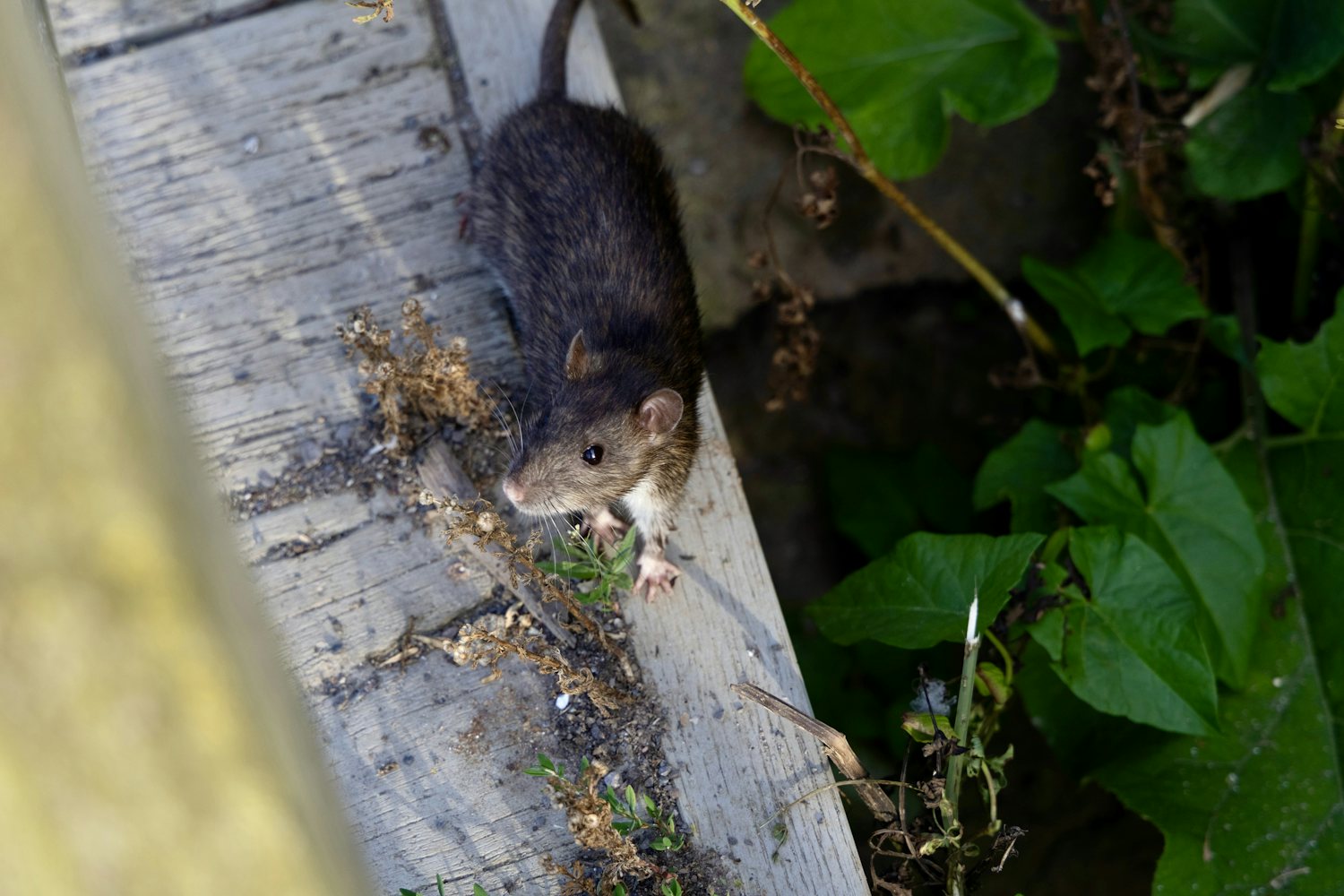
A roof rat does not wander. It commits to a route and repeats it, night after night, keeping a shoulder or a whisker against structure the whole way. Open floor is exposure, and it avoids exposure. Over weeks that repeated contact leaves a physical mark: a dark grease line along the truss chords, the top plate, and the duct runs, made of oil and dirt from the same body passing hundreds of times.
That line is the single most useful thing in an attic. It tells you which timbers are in use, which direction traffic runs, and roughly how long it has been going on. Trapping without finding it first is guesswork.
Rats are also neophobic, meaning genuinely wary of new objects in familiar space. A trap dropped into the open middle of an attic reads as a new object in an area the rat already avoids, and it can sit untouched for a week. A trap set flush against a joist the animal is already committed to travelling sits inside the route rather than beside it, and the wariness has much less to work with.
How the line gets set
Traps go on the mapped runways, tight to the structure, with the trigger across the direction of travel rather than facing along it. Rats pass at speed on a familiar route, and a trigger set across the path catches the animal moving through it.
Spacing matters and it differs by species. Roof rats get sets along the elevated routes: top plates, truss chords, duct runs, and the soffit run where access allows. Norway rats get sets at ground level along foundation lines, behind and under sheds, near burrow openings, and along the base of walls. A house with both, which happens near the river and the canals, gets both.
Household safety shapes the layout throughout. Positions stay well away from pets and children, and where a set has to go in or near occupied living space, the approach changes to suit. This is a large part of why trapping in an occupied Tampa home is not simply a matter of buying more traps.
Why trapping rather than bait
For an occupied house, trapping has one decisive advantage: it produces a body you can count and remove.
A rat that takes bait rarely dies outdoors. It dies where it feels safe, which is inside a wall void, above a ceiling, or under attic insulation. In Tampa heat the result is an odor that builds for about a week, holds, and fades slowly over several more, and the only real fix is to locate and remove the carcass. That is a separate job, and it is one people pay for after choosing bait to save money.
Trapping also gives you a measurement. Catch counts tell you the size of the population and whether the work is finished. Bait tells you nothing except that some of it went missing.
Reading the catch
The pattern of catches over the first week or two carries real information.
- Quick catches, then a rapid drop-off. The usual shape of a small, contained population on one route. This is the common outcome.
- Steady catches that do not decline. Either a larger population than the evidence suggested, or the structure is being resupplied from outside, which points back at an overhead route that has not been cut.
- Catches stop but noise continues. A second route the inspection missed. The job goes back to the roofline rather than forward to cleanup.
- Nothing at all from the start. Wrong runway, wrong species assumption, or the noise is not rats. Squirrels, which are active in daylight, get mistaken for rats regularly.
Trapping is not the whole job
Worth stating plainly, because trapping is the part that feels like progress. An empty house with an open soffit return is a house with a vacancy, and in a city with no winter to slow breeding, that vacancy fills.
So the trap line runs alongside exclusion work, with the main active route deliberately left open until the catch stops, then closed last. Sealing everything on day one risks trapping animals inside the structure, which is how you turn a rat problem into an odor problem. Once the structure is empty and closed, attic cleanup deals with the scent trails that would otherwise advertise the address to the next rat on the block.
What Tampa adds
Two local factors change the trapping picture here. The first is that the animal is nearly always a roof rat, so the line goes high rather than along the floor, and a technician working the floor of an attic is working the wrong plane.
The second is the food supply outside. Backyard citrus, loquat, mango, and avocado support a rat population with no reference to your kitchen at all. That means a trap line inside the house can be competing with an abundant, familiar food source twenty feet away, which is another reason placement on the travel route matters more than what is on the trigger.
Getting started
The details worth having ready when you call: what you are hearing, whereabouts in the house, and what time of night. Noise that starts about an hour after sunset and travels in a line across the ceiling is a roof rat. Daytime scrabbling near the eaves is more likely a squirrel. Low noise near a garage or a shed suggests a Norway rat and a ground-level plan. That one answer usually sets the direction before anyone arrives, and you get the scope and the pricing before any work starts.
Related rat work in Tampa
Rat Removal
Clear the rats living in your attic, soffits, and wall voids with a targeted trap-and-remove plan.
The Tampa ratRoof Rat Removal
The climbing rat behind most Tampa attic noise, traced from the tree line to the hole it uses.
Heavy activityInfestation Treatment
Knock down a breeding population across the whole house, then shut the way back in.
Keep them outPrevention & Exclusion
Close the soffit returns, tile edges, and vent gaps that let rats walk straight back in.
Rat Trapping questions
Why did my own rat traps catch nothing?
Almost always placement. A rat runs a fixed route with a shoulder against structure and avoids open spaces and new objects. Traps set in the middle of an attic floor sit outside the route and get ignored, no matter what bait is on them. Traps set flush along a marked runway, with the trigger across the path, catch quickly.
Is trapping better than poison for rats in Tampa?
For an occupied home, trapping gives you something poison cannot: a body you can count and remove. A rat that dies from bait usually dies inside a wall or under attic insulation, which turns a rat problem into an odor problem for several weeks. Trapping also avoids secondary exposure risk to pets and wildlife.
How long do traps stay in place?
Until the catch stops and stays stopped, which for most Tampa homes is one to three weeks. The line gets checked rather than left. A catch that drops to zero while noise continues means a second route, not a finished job.
What bait works best for roof rats?
Bait matters far less than position. Roof rats respond to fruit and nut-based baits, which fits their diet here, but a well-placed trap with a modest bait outperforms a badly placed one with anything on it. Placement beats product almost every time.

Get the rats out, then keep them out.
Describe what you are hearing and where. You get the scope and the number before anything starts, with no obligation.
813-692-1105Day or night, seven days a week