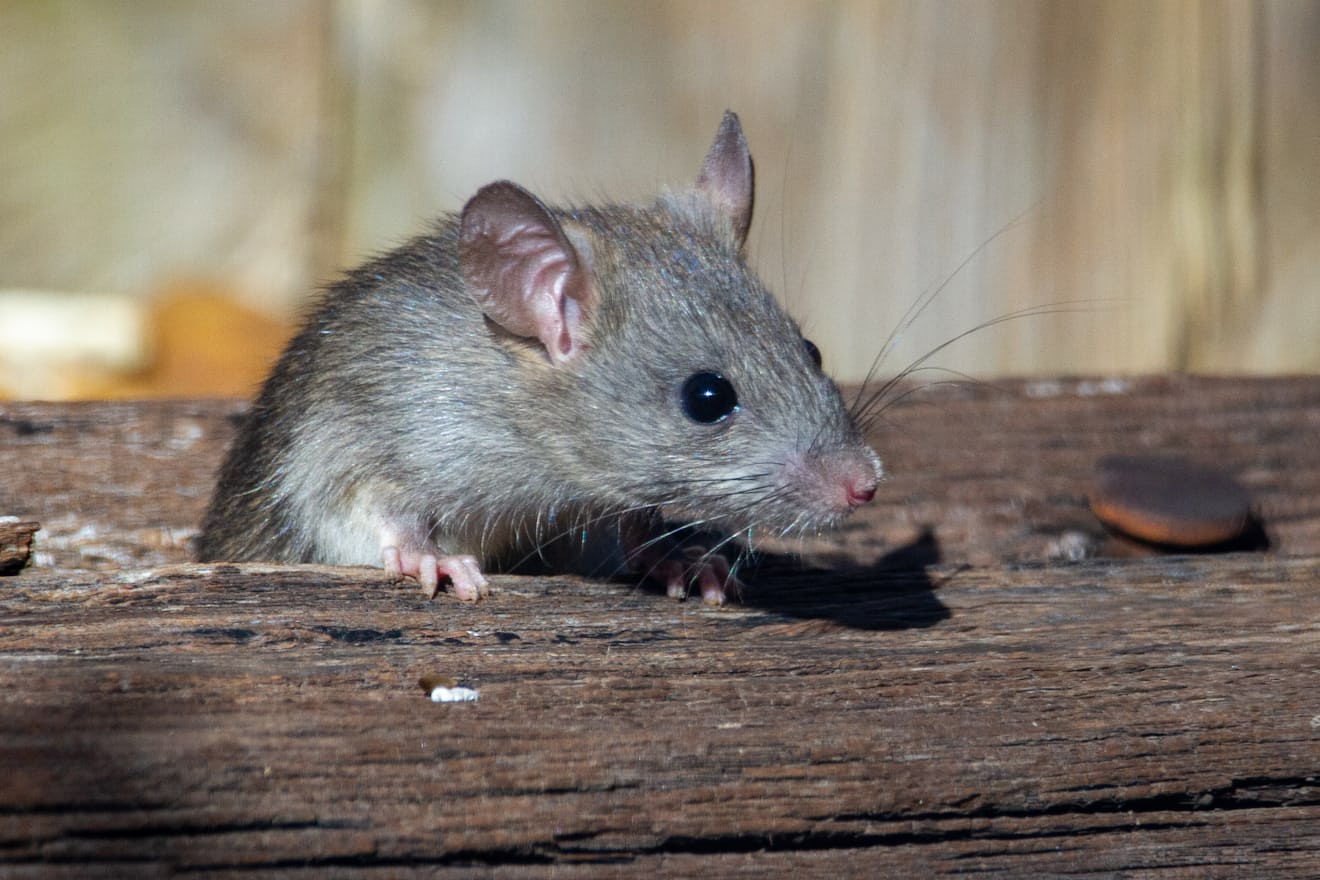
Heavy activity
Rat Infestation Treatment in Tampa, FL
Past a certain size a colony makes young faster than one trap line removes adults.
Call 813-692-1105Rat infestation treatment in Tampa, FL
Rat infestation treatment in Tampa, FL is a different job from removing one animal, and the difference is arithmetic. Past a certain size, a colony produces young faster than a single trap line removes adults. At that point setting a few more traps does not scale the response, it just keeps the population level while it keeps breeding.
Hillsborough County makes this worse than it would be further north for one specific reason. There is no freeze here. Nothing thins the population seasonally, so roof rats breed through the whole year and a small problem does not stay small while you decide what to do about it.
What separates an infestation from a visitor
A few signals reliably indicate an established, breeding population rather than one or two animals that found a way in:
- Noise in more than one area. Activity above the kitchen and above a bedroom at the far end of the house means multiple routes and more animals than one nest holds.
- Droppings in several rooms, or at more than one level of the house.
- Daytime activity. Rats are nocturnal by preference. Seeing one in daylight usually means competition indoors is pushing animals out during hours they would normally avoid.
- Multiple runways. Several distinct grease lines running in different directions across the attic.
- Smell. A persistent musky odor that is not a single carcass, but accumulated urine and nesting material.
- More than one nest site found during inspection.
Treating the whole structure, not the loudest room
The instinct with a heavy infestation is to concentrate everything where the noise is worst. That is usually a mistake, because the noisy area is often the newest expansion rather than the core of the population.
Whole-house treatment means mapping every runway before setting anything, then putting trap lines on all of them simultaneously rather than working one area at a time. Working sequentially lets the untreated areas keep breeding and repopulating the area you just cleared, which is how a job stretches from three weeks into three months.
Density goes up to match. A house with one route and two animals needs a handful of well-placed sets. A house with four routes and an established colony needs considerably more, placed along every marked line, checked frequently, and adjusted as the catch pattern reveals which routes are heaviest.
Reading the catch curve
With a large population the shape of the catch over time is the main diagnostic. A healthy treatment shows heavy catches early, then a steady decline toward zero over two to four weeks. That curve is what finishing looks like.
A flat curve, where catches stay steady rather than declining, means the structure is being resupplied from outside. That sends the work back to the exterior: an overhead route that has not been cut, a food source in the yard holding a large outdoor population, or a neighboring property carrying the source. Adding traps to a flat curve does not fix it. Cutting the supply does.
Where the outdoor population is coming from
Heavy infestations in Tampa usually have an outdoor engine behind them, and it is worth finding rather than assuming the house generated the problem on its own.
Fruit. Citrus, loquat, mango, and avocado in a back yard will support a large roof rat population with no help from indoors. Fruit hollowed out and dropped under the tree is the clearest single indicator there is.
Palms. An untrimmed frond skirt is nesting habitat as well as a ladder to the roof, and a row of them along a property line can hold a lot of animals.
Water corridors. Near the Hillsborough River, the canal network through Town ‘n’ Country, and the drainage ditches across the county, Norway rats maintain outdoor populations that push into ground-level openings as pressure builds.
Commercial neighbors. Homes backing onto retail with dumpster pads absorb the overflow from a population that is being fed continuously, which is a common pattern behind Brandon Boulevard and along the Hillsborough Avenue corridor.
Sealing during, not after
On a heavy job, exclusion runs alongside the trapping rather than waiting for it to finish. Secondary openings get closed early to reduce the number of routes in play and concentrate traffic onto the lines being worked. The main active route stays open until the catch stops, then closes last.
Sealing everything on day one is a mistake with a large population, because it traps animals inside the structure and converts a rat problem into a carcass and odor problem across multiple wall voids at once.
Cleanup after a heavy infestation
A structure that has held a colony for months needs more than droppings removed. Insulation used as nesting material comes out, urine-saturated areas come out, framing gets treated, and chewed flex duct gets flagged. Duct damage is close to universal in Tampa attics after a long infestation, and it has usually been costing money on the power bill for some time.
The scent argument matters more here than on a light job, because accumulated marking is stronger and lasts longer. Attic cleanup is what stops the structure advertising itself to the next animals working the block.
Timeline and cost
A genuine infestation is typically several weeks of active work, with return visits to check and adjust the line, sealing running in parallel, and cleanup at the end. Cost tracks the number of routes, the amount of roofline needing closure, and how much insulation has to come out.
The honest framing is that this job only gets more expensive with time. Every month of year-round breeding adds animals, more damage, and more contaminated material to remove. The scope and the number come before anything starts, with no obligation.
Related rat work in Tampa
Rat Removal
Clear the rats living in your attic, soffits, and wall voids with a targeted trap-and-remove plan.
The Tampa ratRoof Rat Removal
The climbing rat behind most Tampa attic noise, traced from the tree line to the hole it uses.
Keep them outPrevention & Exclusion
Close the soffit returns, tile edges, and vent gaps that let rats walk straight back in.
Knock it downRat Extermination
Eliminate the rats already nesting inside, with placements kept away from pets and kids.
Infestation Treatment questions
How do I know if it is an infestation or just one rat?
Noise in more than one part of the house, droppings in several rooms or on more than one floor, daytime activity, and a smell all point to an established population rather than a single animal. Daytime sightings in particular usually mean the population has outgrown the space and competition is pushing animals out during safer hours.
How fast do rats multiply in Florida?
Fast, and faster here than in colder states, because Tampa has no winter to interrupt breeding. A female roof rat can produce several litters a year with several young in each. That compounding is the reason a problem noticed in autumn is a materially larger job by spring.
Can a heavy infestation be handled in one visit?
No, and anyone saying otherwise is selling a visit rather than a result. A breeding population takes repeated trapping over several weeks, with the line checked and adjusted, alongside sealing. Cleanup follows once the structure is empty.
Do I need to move out during treatment?
No. The work is in the attic, the soffit run, wall voids, and along the exterior, with trap positions kept away from pets and children. Households stay in place through the process.

Get the rats out, then keep them out.
Describe what you are hearing and where. You get the scope and the number before anything starts, with no obligation.
813-692-1105Day or night, seven days a week